The short answer
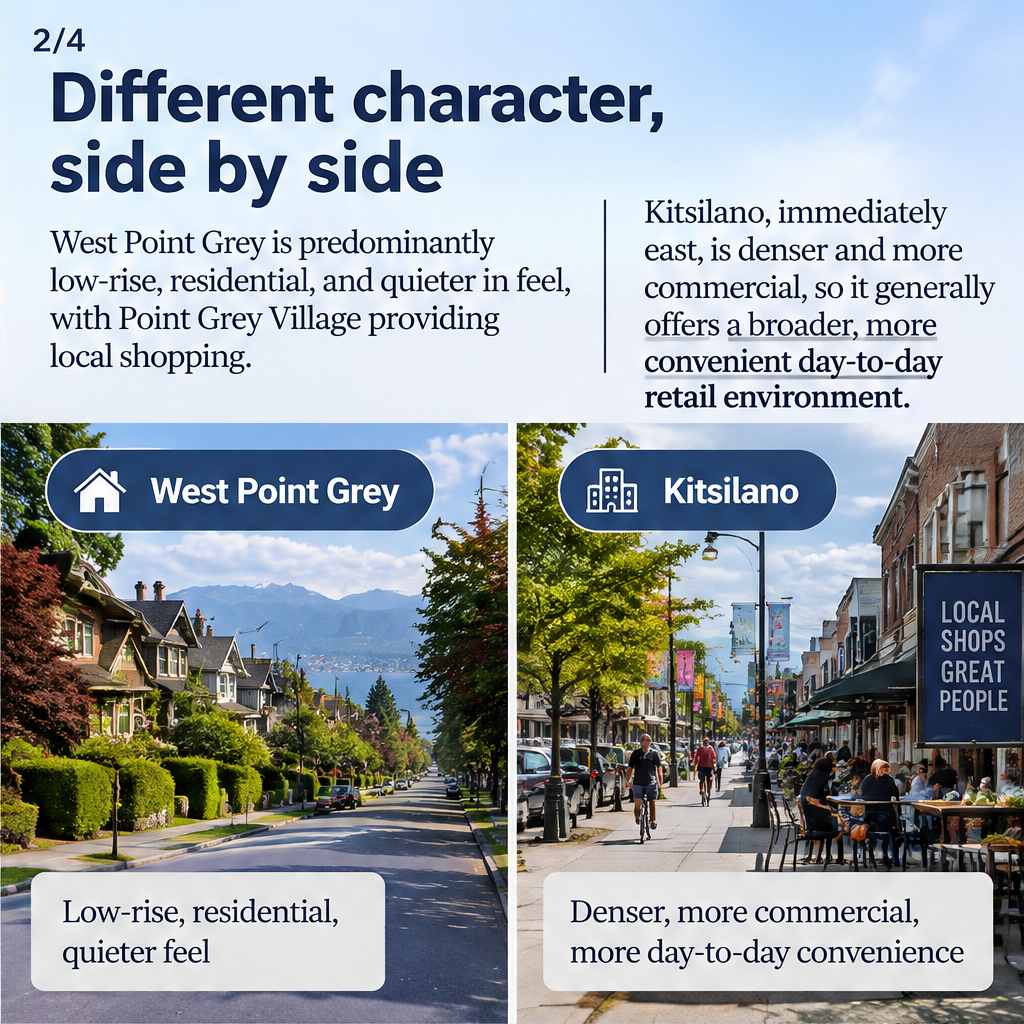
West Point Grey is predominantly low-rise, residential and quieter, with Point Grey Village providing local shopping; Kitsilano, immediately east, is denser and more commercial, so it generally offers broader day-to-day retail convenience.
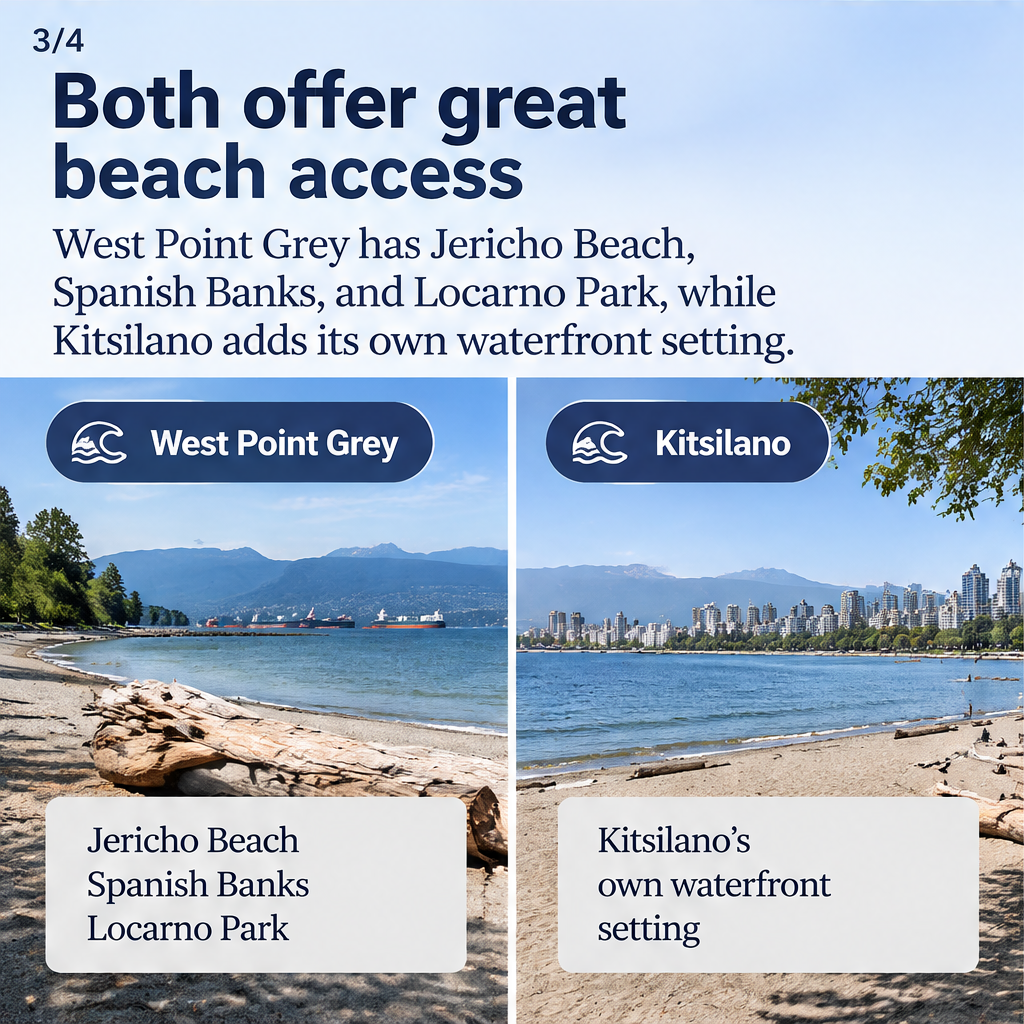
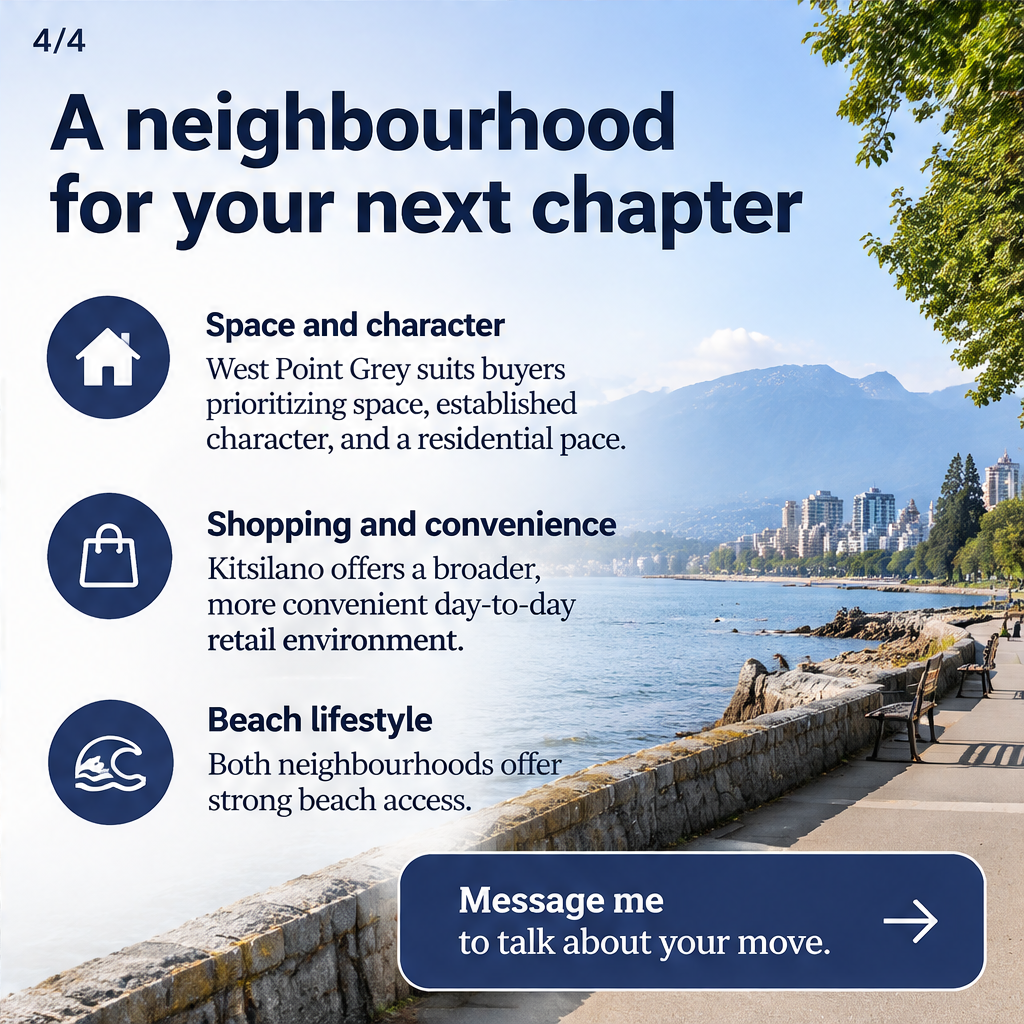
Both neighbourhoods have strong beach access — Jericho Beach, Spanish Banks and Locarno Park serve West Point Grey while Kitsilano has its own waterfront areas. A practical test: visit each area in morning, midday and evening to compare noise, parking and shop selection.
Updated

What is the difference between West Point Grey and Kitsilano?
The difference between West Point Grey and Kitsilano is mainly how the two neighbourhoods are built and used: West Point Grey is predominantly low-rise and residential, while Kitsilano is denser and more commercial. West Point Grey’s local shopping is centred on Point Grey Village; Kitsilano offers a wider retail environment. Both areas provide strong beach access, but their day-to-day pace and retail choice differ.
7 things to know about comparing West Point Grey and Kitsilano in Vancouver
1. Density and built form
West Point Grey is predominantly low-rise and residential, giving it a quieter feel in most blocks. Kitsilano, immediately east, is denser with more mixed-use and commercial streets. Buyers who prioritise space and an established residential character will often prefer West Point Grey; those who prioritise walkable retail and higher housing choice may lean toward Kitsilano.
2. Local shopping and services
Point Grey Village provides the main local shopping for West Point Grey, focused on neighbourhood needs. Kitsilano’s commercial streets offer a broader retail mix and generally greater day-to-day convenience. Consider what you need within a short walk—groceries, cafes, personal services—and check shops at different times of day to judge variety and hours.
3. Beach access and waterfront options
West Point Grey is served by Jericho Beach, Spanish Banks and Locarno Park, giving substantial sandy waterfront and park space. Kitsilano also has its own waterfront setting and beaches. Both neighbourhoods provide easy beach access, so decisions about waterfront depend more on exact location and proximity than on which neighbourhood you choose.
4. Noise and daily pace
West Point Grey’s predominantly residential character usually means a quieter daily pace. Kitsilano’s denser and more commercial streets typically carry more daytime and evening activity. Prospective buyers should visit both neighbourhoods at different times — weekday morning, midday weekend, and evening — to assess noise and pedestrian activity.
5. Parking and mobility
Street parking and traffic patterns differ with density: lower-rise residential streets in West Point Grey tend to feel less congested, while Kitsilano’s commercial corridors can be busier and have different parking or loading demands. Factor in how often guests arrive by car, transit access, and cycling routes when comparing convenience.
6. Housing types and space
West Point Grey’s housing stock leans toward lower-rise homes with more space and an established character. Kitsilano’s higher density supports a wider range of housing types, which can mean more options for smaller units and mixed-use buildings. Match housing type to lifestyle needs: space, maintenance, and proximity to shops matter differently for each buyer.
7. Future planning and buying considerations
Because Kitsilano is denser and more commercial, its streets may offer more immediate retail choices; West Point Grey’s appeal is its residential calm and local village shopping. When buying, speak with the city planning department about local plans, and consult a lender or lawyer for financing and title questions before making an offer.
How to choose between West Point Grey and Kitsilano — step by step
- List priorities: write down your top needs (space, shopping, beach proximity, commute, noise). This clarifies whether you value West Point Grey’s residential character or Kitsilano’s retail convenience.
- Visit at varied times: spend mornings, middays and evenings in each neighbourhood to assess noise, parking and shop hours. Bring a simple checklist to compare observations.
- Map daily errands: plot your typical weekly stops (groceries, transit, schools, medical) and note which neighbourhood offers faster access. Use walking time or short drive estimates rather than assumptions.
- Check local services: confirm what is available at Point Grey Village versus Kitsilano commercial streets for the services you use most.
- Talk to authorities: check current planning or zoning details with the City of Vancouver and, if relevant, ask a lawyer about title or covenant questions. Consult a lender about financing and an agent for market context.
- Compare two or three concrete properties: evaluate similar price ranges and property types in both neighbourhoods to see which delivers the best match for your priorities.
- Decide and proceed: once a neighbourhood and property type suit your needs, follow standard buying steps with a lawyer and lender to complete the purchase.
| Item | West Point Grey | Kitsilano | Who to ask |
|---|---|---|---|
| Typical built form | Predominantly low-rise, residential | Denser, more mixed-use and commercial | City of Vancouver planning department |
| Local shopping | Point Grey Village provides neighbourhood retail | Broader commercial streets with more retail variety | Local business associations or neighbourhood advisors |
| Beach access | Jericho Beach, Spanish Banks, Locarno Park | Own waterfront beaches and park spaces | Parks department / municipal parks info |
| Example: day-to-day convenience | Quieter, fewer commercial choices within short walk | More shops and services within easy walking distance | Talk to a local agent for on-the-ground comparisons |
What's different in British Columbia?
Provincial rules in British Columbia affect property transactions, title registration and real estate licensing, but neighbourhood character and local zoning are set by the municipality. For transactional, legal and regulatory details, check current guidance with the provincial government, the Land Title and Survey Authority of British Columbia, and the provincial regulator for real estate licensing. Consult a lawyer or notary for closing and title matters.
Common mistakes
- Assuming every block in a neighbourhood is the same: micro‑differences in street type and proximity to commercial corridors change noise and convenience.
- Visiting only once: a single visit can miss evening/weekend activity levels or parking pressures.
- Overvaluing proximity to a single shop: check the full range of services you use regularly, not just one preferred store.
- Not checking planning context: future zoning or public projects can alter commercial or traffic patterns—verify with the city.
Frequently asked questions
Which neighbourhood is quieter: West Point Grey or Kitsilano in Vancouver?
West Point Grey is generally quieter because it is predominantly low-rise and residential. Kitsilano, immediately east, tends to be denser and more commercial, which usually brings more daytime and evening activity. Visit both neighbourhoods at different times to confirm levels of noise and pedestrian activity.
Which has better everyday shopping in West Point Grey versus Kitsilano?
Kitsilano usually offers broader day-to-day retail and services because it is denser and more commercial. West Point Grey relies on Point Grey Village for local shopping, which serves neighbourhood needs but is smaller in scale. Compare shop variety for your key errands before deciding.
How does beach access compare between West Point Grey and Kitsilano?
Both neighbourhoods have strong beach access. West Point Grey is served by Jericho Beach, Spanish Banks and Locarno Park, while Kitsilano has its own waterfront beaches. Your exact walking distance to a particular beach depends on the property location within each neighbourhood.
What if I need both quiet streets and quick shopping access?
If you need quiet residential streets but want easy access to shops, look for properties on the quieter edges of Kitsilano or near Point Grey Village in West Point Grey. Visit prospective streets at multiple times and map walking routes to the shops you use most before committing.
Who decides zoning and who pays for changes that affect these neighbourhoods?
The City of Vancouver decides zoning and land-use changes; municipal council and planning staff administer those rules. Costs for any rezoning or development-related works are typically determined through municipal approvals and developer agreements. Check current details with the City of Vancouver planning department.
Will parking be easier in West Point Grey than Kitsilano?
Parking often feels easier in West Point Grey because of its lower density and residential streets, whereas Kitsilano’s commercial corridors can be busier. Actual parking availability varies block by block; test parking during busy periods and ask the city about residential permit zones if relevant.
How should buyers verify which neighbourhood suits them best?
Buyers should list priorities, visit both neighbourhoods at varied times, map daily errands and compare a few specific properties. For legal, financing and title checks, consult a lawyer or notary and a lender. For planning questions, check with the City of Vancouver.
Official sources
- City of Vancouver — local planning, zoning and neighbourhood maps
- Province of British Columbia — provincial property and land transaction guidance
- Land Title and Survey Authority of British Columbia — land title registration and title search information
- BC Financial Services Authority — real estate licensing and regulator information

About the agent
Dr Sam Mehrbod
Vancouver, British Columbia · Team 3000 Realty Ltd.
Sam Mehrbod, Ph.D., is a Greater Vancouver REALTOR® specializing in investment, development, and high-value residential opportunities across Vancouver West Side, North Vancouver, the North Shore, and Greater Vancouver. With 14 years of real estate experience and a background in construction, building, and project management, Sam helps clients evaluate properties with a deeper lens—development potential, renovation upside, cost estimates, pro formas, and long-term value. Known for blending market insight with technology, Sam uses data, digital marketing, and advanced property tools to help buyers secure exceptional deals and sellers achieve fast, top-dollar results. His track record includes homes sold over asking in one day and helping a buyer purchase a property $1 million below government assessment. Warm, strategic, and tech-forward, Sam brings investors, developers, buyers, and sellers a rare combination of construction knowledge, analytical thinking, and modern marketing expertise
General information only, not legal, tax, financial or insurance advice. Rules and products change; confirm details with a licensed professional or your local authority.