
• Vancouver’s Market Is Firming—Not Boiling

    Vancouver’s Market Is Firming—Not Boiling

    Vancouver’s housing market is showing signs of firmer competition—but it is not exactly breaking a sweat. Homes took a median 21 days to sell and achieved 97% of their list price, pointing to steady activity without widespread bidding-war intensity. Metro Vancouver’s 45% sales-to-new-listings ratio improved, suggesting demand is becoming more responsive. However, approximately eight months of supply continues to favor buyers, keeping negotiation power and careful pricing important. For sellers, strong presentation and realistic pricing can help attract serious attention. Buyers may have room to compare options and negotiate strategically. The takeaway: momentum is building, but the market remains balanced toward buyers. Local conditions vary, so a neighbourhood-specific conversation is the smartest next step.

    Continue to full article

  • Vancouver – Most Expensive Homes of August 2026

    Vancouver — Most Expensive homes for August 2026.

    Listings (sorted by price):
    1. Listing R3041987 — $58,800,000
    2. Listing R3143519 — $49,880,000
    3. Listing R3147443 — $39,980,000
    4. Listing R2934837 — $32,000,000
    5. Listing R2934825 — $30,000,000
    6. Listing R3058864 — $29,800,000
    7. Listing R3127725 — $28,000,000
    8. Listing R3138481 — $27,880,000
    9. Listing R3045716 — $26,880,000
    10. Listing R3136700 — $23,750,000
    11. Listing R3134721 — $22,000,000
    12. Listing R3050988 — $19,980,000
    13. Listing R3150070 — $19,880,000
    14. Listing R3083839 — $19,800,000
    15. Listing R3111674 — $19,800,000

  • 1238 Melville #1903, Vancouver

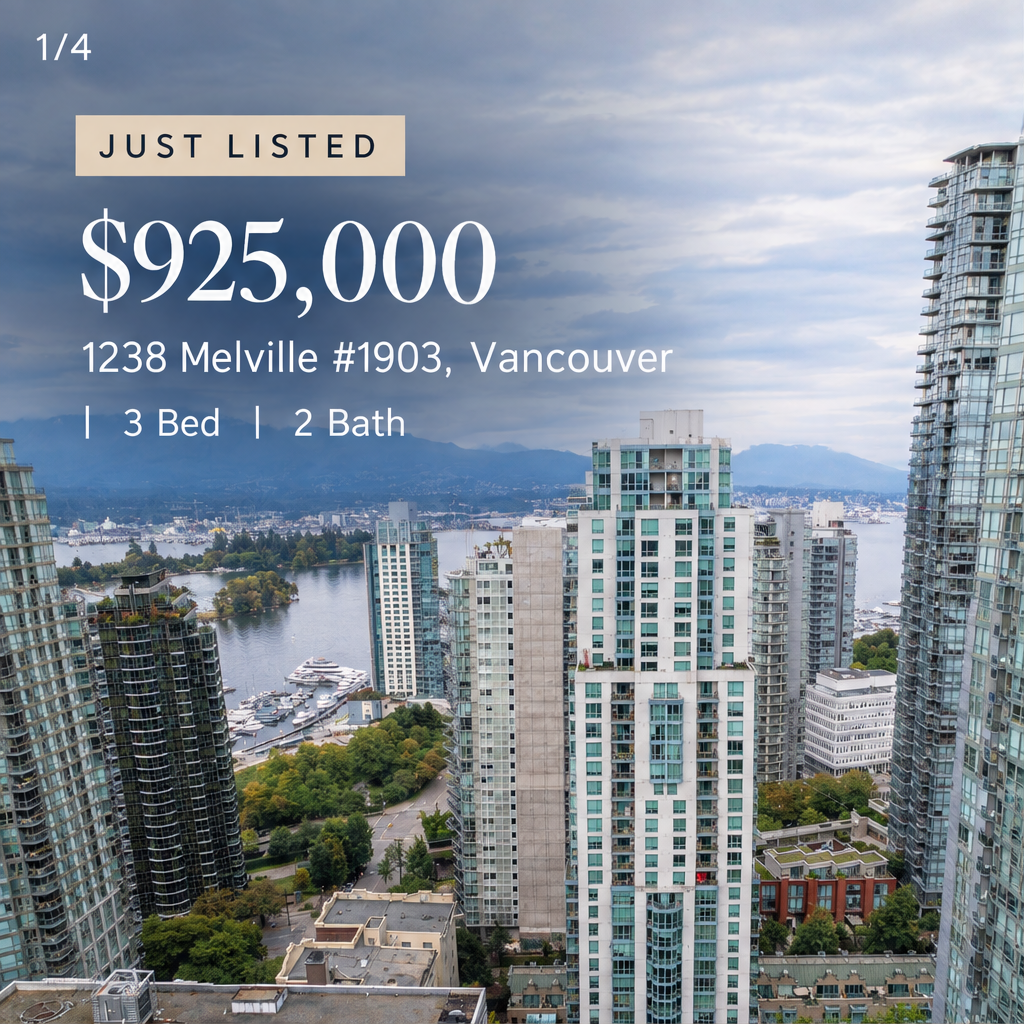
    1238 Melville #1903, Vancouver

    1238 Melville #1903, Vancouver
    Price: 925000
    Beds: 3
    Baths: 2
    Home type: Apartment/Condo
    Just Listed

    Continue to full article

  • Vancouver Home Sales Dip 4.6%

    The latest Vancouver market stats reveal a 4.6% dip in home sales, with just 1,900 transactions recorded last month. As someone who spends every day analyzing Vancouver’s neighborhoods for investment and development potential, I’m watching this continued second-half slowdown with a keen eye. The composite benchmark price for residential properties now sits around $1.1M—a figure shaped by a combination of rising inventory (now at 15,800 homes) and tempered sales activity.

    It’s notable that 4,100 new listings were added, expanding options for buyers and investors alike. For those evaluating the market from a strategic or value-add perspective, this environment demands close attention to both price trends and supply levels. Board forecasts suggest this softer pace could persist through the end of 2026, making due diligence and long-term planning more important than ever.

    Whether you’re assessing renovation upside, development feasibility, or acquisition timing, understanding inventory and pricing dynamics is essential right now. My approach combines construction insight and data-driven strategy, ensuring clients move with confidence as the Vancouver market evolves.

  • Metro Vancouver Buyers Enjoy More Choices in Real Estate Market

    Metro Vancouver Buyers Enjoy More Choices in Real Estate Market

    Despite what might seem like favourable conditions for buyers, Metro Vancouver’s real estate market saw a 4.6% decline in sales this August compared to last year. The factors at play—slowed immigration, weaker investor activity, and high mortgage rates—are creating some headwinds. Average prices dipped 5.6% to $1,081,900 in Metro Vancouver, while the Fraser Valley experienced a 14% drop in sales and a 7% decrease in prices, now at $869,900.

    For those of us who analyze these numbers closely, there’s more beneath the surface. Every shift—like the current dip—can open up unique opportunities, especially for clients looking at long-term value, development potential, or renovation upside. My background in construction and project management means I’m always evaluating how market movements impact real property potential, not just sticker prices. As always, I’m keeping a close eye on how these trends could translate into strategic moves for buyers, sellers, and investors across Greater Vancouver.

    Continue to full article

  • Arbutus Station + 99 B-Line: A Smoother UBC Commute?

    Arbutus Station + 99 B-Line: A Smoother UBC Commute?

    For commuters heading toward UBC, the planned Broadway Subway extension to Arbutus Station could make cross-city trips more straightforward when service begins in 2027. Riders are expected to be able to connect at Arbutus with 99 B-Line service toward UBC, adding a useful rapid-transit link from the Broadway corridor. However, current frequent buses on Broadway, 4th Avenue, and Burrard will continue to matter. Your actual time savings will depend on your starting point, transfer timing, and daily service conditions. If you work or live in Kitsilano, compare the routes you use most before making commute or real estate decisions.

    Continue to full article

  • Vancouver Homebuyers Benefit from Easing Prices

    Vancouver Homebuyers Benefit from Easing Prices

    Even with a slight dip in Vancouver home prices—down $10,300—and a modest reduction in mortgage rates, the bar for entry remains exceptionally high. The required income to purchase a typical Vancouver home now stands at $223,860, still far outpacing the city's median salary of $69,000. While monthly payments have eased by $70 and the income threshold has dropped $2,540, these adjustments are a reminder that affordability is relative in our market.

    Having spent 14 years immersed in Greater Vancouver real estate, I view these shifts through a wider lens. A small price drop doesn’t automatically translate into accessibility, but it does open nuanced opportunities for those thinking beyond the surface—whether that's exploring properties with hidden development or renovation potential, or leveraging market data to identify value others might miss. Vancouver’s landscape is challenging, but with the right analysis and strategy, buyers and investors can uncover options that align with long-term goals.

    Continue to full article

  • Vancouver and Fraser Valley Offer More Choices for Buyers

    Vancouver and Fraser Valley Offer More Choices for Buyers

    Navigating Vancouver and Fraser Valley’s shifting market requires more than surface-level stats. In August 2026, Metro Vancouver home sales dipped 4.6%, with prices down 5.6%—detached homes taking the brunt of that adjustment. In the Fraser Valley, prices slid 7%, driven by higher inventory, slowing immigration, and persistent mortgage rates. As someone who approaches every property with an investor’s lens, I see these numbers not just as a headline, but as signals for opportunity. Whether you’re weighing the development potential of a West Side lot or considering long-term value in North Vancouver, understanding the deeper market mechanics is crucial. My focus remains on helping clients read between the lines—combining construction background, data-driven analysis, and strategic thinking to uncover the real opportunity behind the numbers.

    Continue to full article

  • Canada: Rate Cuts Can Worsen Affordability

    A new study from central bank researchers sheds light on a point I see play out regularly in Vancouver’s market: lowering interest rates can actually worsen housing affordability in the short term. Their data shows that when rates drop, resale activity surges almost immediately, with the full effect unfolding over 18 to 24 months. Yet, housing starts—especially for multi-unit projects—don’t ramp up until about two years later.

    The research also highlights that strong labour markets and easier lending conditions fuel this demand spike, as buyers feel more confident and move quickly. But on the supply side, builders need time: improved project viability thanks to higher prices and lower financing costs is just the first step. Permitting, planning, and construction all take much longer.

    In my experience working with investors and developers across Greater Vancouver, this lag between demand and supply is significant. Rate cuts may eventually help bring more homes to market, but supply always trails demand—so relying on monetary policy alone can’t fix affordability. Understanding these cycles is key to making smart, long-term real estate decisions.

  • Canada Housing Just Got More Interesting

    The Canadian housing landscape just took another turn—sales are picking up steam, yet many buyers are proceeding thoughtfully, and total activity remains a step behind last year’s pace. What’s especially notable in recent weeks: new listings are tapering off, while sales are nudging upward, which is gradually steering the market toward a healthier supply-demand balance. For those who’ve been watching price volatility, there’s some reassurance—price growth is moderate, grounding the market and sidestepping the dramatic correction some predicted.

    If you’re considering your next move, regional variation is more pronounced than ever. From my experience across Greater Vancouver’s dynamic markets, I’ve seen how the right neighborhood selection—and a careful look at each property’s underlying value—can make all the difference, whether you’re buying, selling, or investing. As always, I’m leveraging construction insight, data, and a strategic approach to help clients read between the lines and spot the opportunities that matter.